
How I Got Here
I didn’t start with Linux.
I didn’t even start with personal computers.
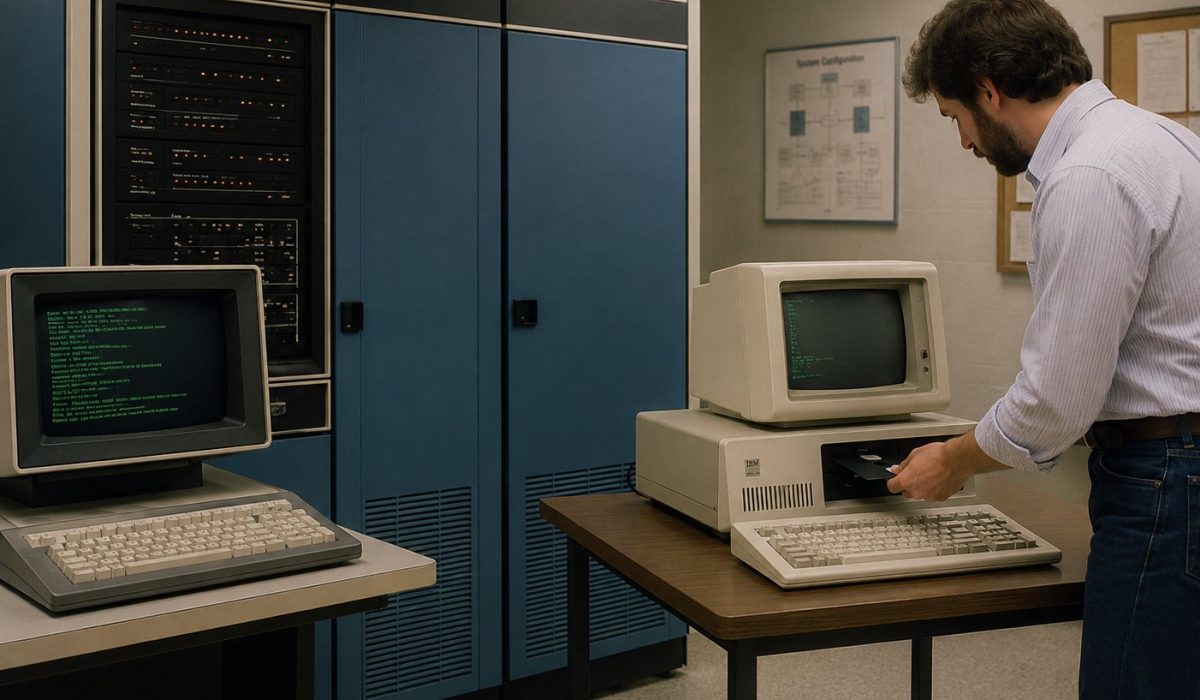
My first real exposure to computing was through business mini-computers in the 1980s. These were systems built for purpose—accounting, operations, getting real work done. They weren’t flashy, and they weren’t personal. They were tools.
From there, I moved through the early evolution of personal computing:
DOS systems, the first versions of Windows, early attempts at multitasking, and eventually the rise of the internet. I watched it all develop in real time.
I wasn’t formally trained in any of it. Like many people at the time, I learned by doing. I taught myself basic programming because I needed it for my accounting work. If something didn’t exist, you figured out how to build it—or work around it.
At one point, I even made what I thought was a confident prediction:
that the IBM PC would never really be business-ready. The storage was too limited. It wasn’t built for multiple users. It didn’t feel like a serious system.
I was wrong about that, of course.
But that perspective came from a different way of thinking about computers—one where systems were expected to be robust, controlled, and purpose-driven.
Over time, personal computing evolved into something very different. More powerful, more accessible—but also more abstracted. More convenient, but in some ways, less under your control.
I never paid much attention to operating systems themselves. I just used whatever worked and got the job done.
Until recently.
Lately, I’ve found myself thinking more about what’s underneath the surface—the systems we rely on, the direction they’re heading, and how much control we really have over them.
That’s what led me to start exploring Linux.
Not as a technical exercise, but as a question:
what does it mean to actually own and understand the system you use?
That’s what this site is about.
Posted in stories by Geoff Stevens