
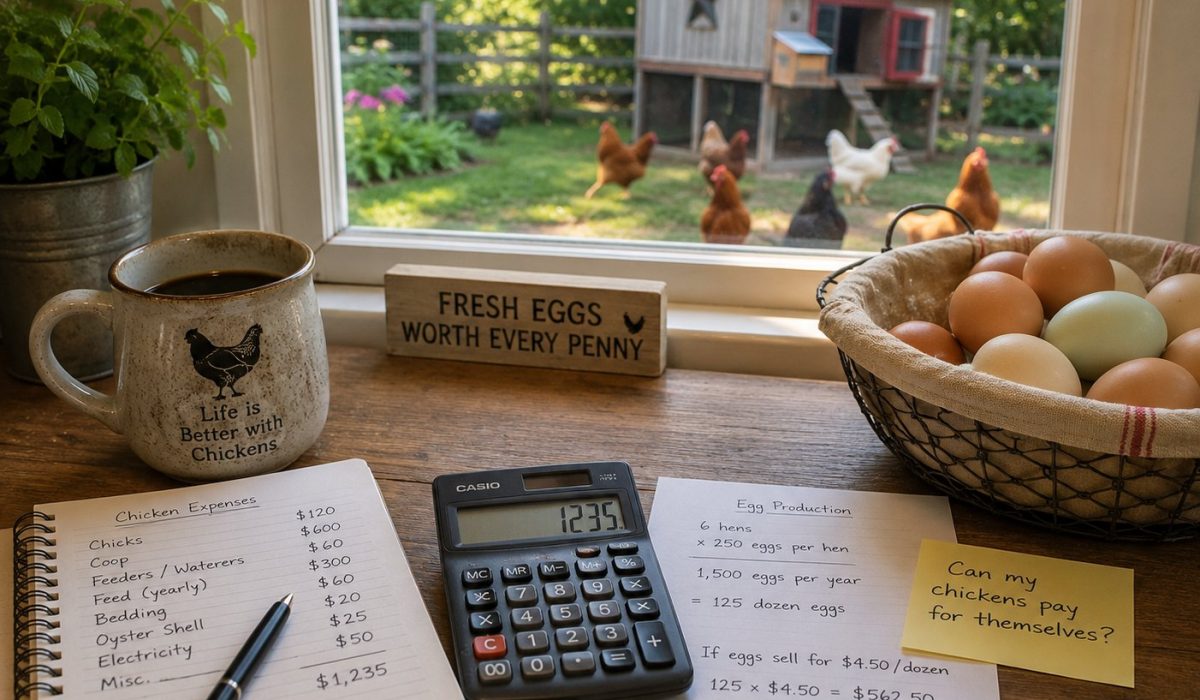
Can Backyard Chickens Pay for Themselves?
One of the most common questions asked by new chicken owners is:
“Can my chickens actually pay for themselves?”
The honest answer is:
Sometimes—but probably not in the way most people expect.
Backyard chickens are rarely a path to significant profit. However, many flocks can offset a substantial portion of their ongoing costs through egg production, reduced grocery expenses, and occasional sales to friends and neighbors.
The First Year Is Usually the Most Expensive
Most chicken owners spend far more money during the first year than they anticipated.
Common start-up expenses include:
-
Chicks or pullets
-
Brooder equipment
-
Feeders and waterers
-
Coop construction or purchase
-
Fencing and predator protection
-
Nest boxes and roosts
Depending on the setup, a new flock can cost anywhere from a few hundred dollars to several thousand dollars before the first egg is collected.
For this reason, very few flocks "pay for themselves" during the first year.
The Economics Improve Over Time
The math begins to change once the coop and equipment have been purchased.
Consider a flock of six productive hens:
-
250 eggs per hen annually
-
1,500 eggs per year
-
Approximately 125 dozen eggs
If grocery eggs cost $4 to $6 per dozen, those eggs represent:
$500 to $750 worth of eggs each year
As long as feed and maintenance costs remain reasonable, the flock may begin recovering much of its annual expense.
Selling Surplus Eggs
Many backyard chicken owners eventually discover they have more eggs than their household can use.
Neighbors, coworkers, friends, and family members are often eager to purchase fresh farm eggs.
Some owners sell eggs:
-
Directly from their home
-
Through small roadside stands
-
To friends and coworkers
-
Through local community networks
Even selling a few dozen eggs each month can help offset feed and bedding costs.
Trading Instead of Selling
Not every benefit needs to involve cash.
Some chicken owners trade eggs for:
-
Garden vegetables
-
Homemade baked goods
-
Honey
-
Firewood
-
Other farm products
These informal exchanges can help stretch household budgets while building stronger community connections.
The Breeds Matter
Some breeds produce significantly more eggs than others.
Top egg-producing breeds include:
-
Golden Comets
-
Leghorns
-
Rhode Island Reds
-
Australorps
A flock made up primarily of high-production layers will generate far more eggs than a flock focused on ornamental or show breeds.
The Hidden Value
Many owners eventually realize that the biggest returns aren't financial.
Chickens provide:
-
Fresh eggs
-
Entertainment
-
Pest control
-
Garden compost materials
-
Educational opportunities for children
-
A closer connection to food production
Those benefits can be difficult to measure in dollars.
A Realistic Expectation
Most backyard flocks will not generate large profits.
In fact, many chicken owners joke that their hens produce the most expensive eggs they've ever eaten.
Yet the joke usually comes with a smile.
Over time, a well-managed flock can often cover much of its feed and maintenance costs. Some owners may even earn a small surplus through egg sales. But for most people, the real reward comes from the experience itself.
The fresh eggs are wonderful.
The possibility of breaking even is nice.
But the enjoyment of keeping chickens is often what makes the investment worthwhile.
Posted in eggs--profit by Erik Johansson