
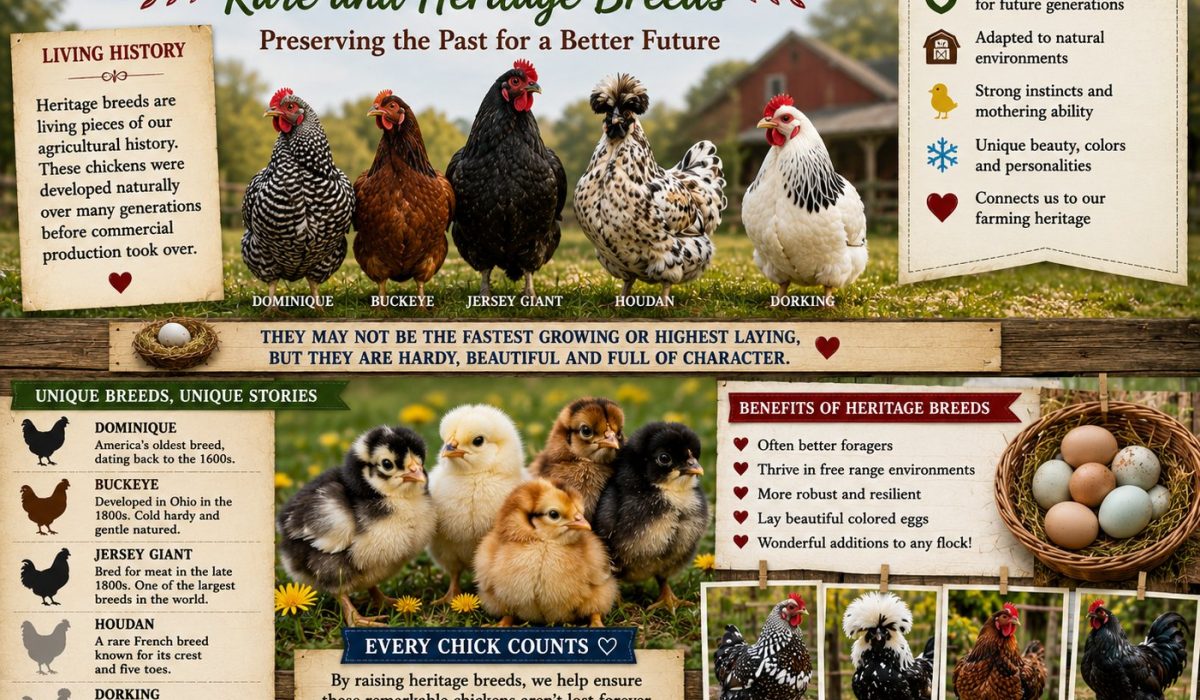
Rare and Heritage Breeds
When most people think of chickens, they picture the familiar breeds commonly found in backyard flocks and farmyards. But beyond the popular layers and show birds lies another fascinating corner of the poultry world—a collection of rare and heritage breeds whose histories often stretch back hundreds of years.
For many poultry enthusiasts, raising these birds is about more than eggs or appearance. It's about preserving living pieces of agricultural history.
What Is a Heritage Breed?
A heritage breed is generally a traditional breed that developed naturally over many generations before the rise of modern commercial poultry production.
These breeds typically:
-
Mate naturally
-
Grow at a slower rate
-
Have long productive lives
-
Retain strong instincts
-
Adapt well to outdoor environments
Many heritage breeds were once common on family farms across America and Europe.
Today, some have become surprisingly uncommon.
Why Some Breeds Became Rare
As commercial agriculture expanded during the twentieth century, poultry producers began focusing on breeds that could maximize egg production or meat growth.
Specialized commercial birds gradually replaced many traditional breeds.
As a result, some historic breeds saw their numbers decline dramatically.
A few nearly disappeared altogether.
Without dedicated breeders and hobbyists, several of these breeds might have been lost forever.
Living History in the Backyard
One of the most rewarding aspects of raising heritage chickens is knowing that each bird carries a connection to the past.
A flock of heritage chickens may resemble birds that:
-
Supplied eggs to pioneer families
-
Lived on nineteenth-century farms
-
Traveled with settlers moving west
-
Helped sustain rural communities
Keeping these breeds alive allows future generations to experience an important part of agricultural history.
Remarkable Heritage Breeds
Many heritage breeds have unique stories.
Examples include:
Dominique
Often considered America's oldest chicken breed, the Dominique was a common sight on early American farms. Its distinctive barred plumage and calm temperament continue to attract enthusiasts today.
Buckeye
Developed in Ohio by Nettie Metcalf in the late 1800s, the Buckeye remains one of the few American breeds created by a woman. Known for its rich mahogany color and cold-weather hardiness, it has a devoted following.
Jersey Giant
Originally developed to provide a large meat bird before modern broilers existed, Jersey Giants remain one of the largest chicken breeds in the world.
Houdan
This unusual French breed features a distinctive crest and five toes, making it one of the most recognizable heritage chickens.
Dorking
With roots dating back to Roman times, the Dorking is one of the oldest known chicken breeds still raised today.
More Than Productivity
Many heritage breeds cannot compete with modern commercial layers in terms of egg numbers.
Yet owners value them for other reasons:
-
Historical significance
-
Unique appearance
-
Genetic diversity
-
Hardiness
-
Personality
For hobbyists, preserving a breed often becomes more important than maximizing production.
Protecting Genetic Diversity
Every chicken breed carries unique traits developed over centuries.
These characteristics may include:
-
Disease resistance
-
Cold tolerance
-
Heat tolerance
-
Mothering ability
-
Foraging skills
Maintaining a wide variety of breeds helps preserve valuable genetics that may prove important in the future.
Many conservation organizations actively encourage breeders to maintain healthy populations of rare poultry breeds.
A Different Kind of Satisfaction
Owners of rare breeds often describe a special feeling when watching their birds roam the yard.
They know they are caring for something uncommon.
Something that might have disappeared if people had not continued breeding and preserving it.
Each new chick represents another generation helping ensure the breed's survival.
Keeping History Alive
For some poultry keepers, rare and heritage breeds offer the perfect combination of beauty, history, and purpose.
The birds may not lay the most eggs.
They may not grow the fastest.
But they carry stories that span generations.
By raising and sharing these remarkable chickens, modern hobbyists help preserve an important piece of agricultural heritage—one flock at a time.
And that makes every egg, every chick, and every feather part of a much larger story.
Posted in show--hobby by Erik Johansson