
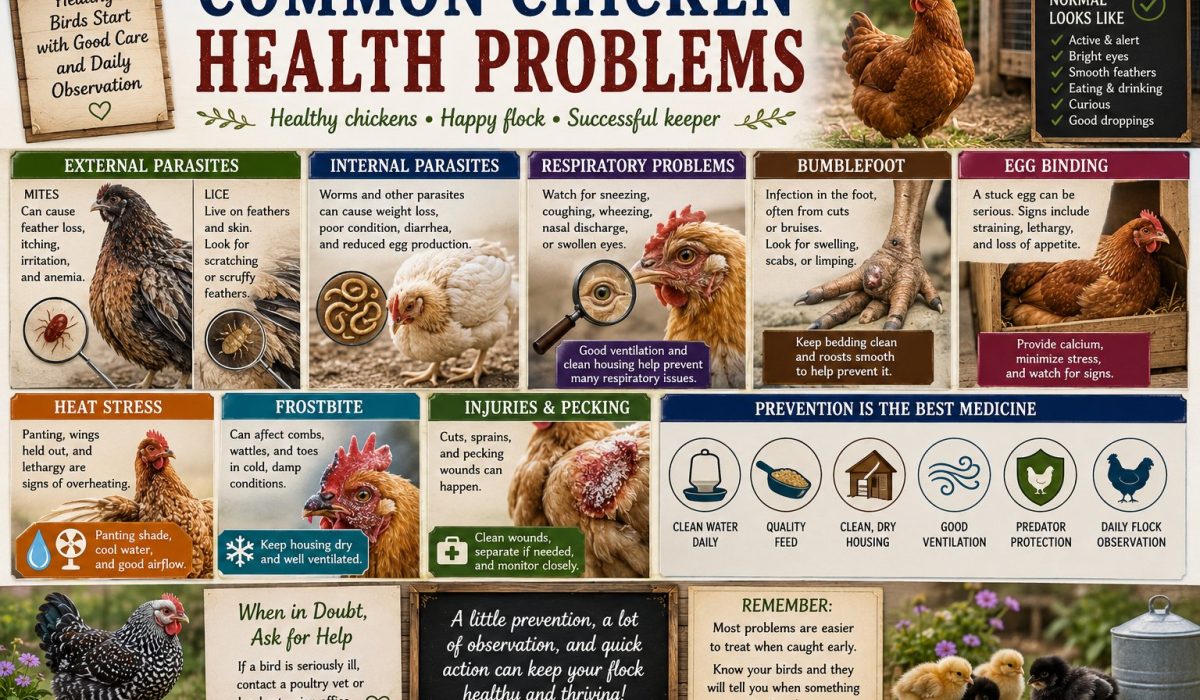
Common Chicken Health Problems
One of the advantages of raising chickens is that healthy birds are generally hardy and relatively easy to care for. With good housing, proper nutrition, clean water, and routine observation, many flocks remain healthy for years.
Even so, every chicken owner will eventually encounter a health issue or two.
The key is learning to recognize problems early and respond appropriately.
Know What Normal Looks Like
The best health tool any chicken owner has is observation.
Healthy chickens are usually:
-
Active and alert
-
Eating and drinking regularly
-
Bright-eyed
-
Smooth feathered
-
Curious about their surroundings
When a bird suddenly acts differently, it is often the first sign that something may be wrong.
External Parasites
Parasites are among the most common problems in backyard flocks.
Mites
Mites are tiny pests that feed on chickens and can cause:
-
Feather loss
-
Irritated skin
-
Reduced egg production
-
Weight loss
Birds may appear restless or spend excessive time preening.
Lice
Lice live on the bird and feed on feathers and skin debris.
Signs may include:
-
Scruffy feathers
-
Excessive scratching
-
Reduced condition
Regular coop cleaning and routine flock inspections help prevent infestations.
Internal Parasites
Chickens can also develop internal worms and other parasites.
Possible symptoms include:
-
Weight loss
-
Poor feather condition
-
Reduced egg production
-
Diarrhea
-
General lack of energy
Many chicken owners work with local veterinarians or poultry experts when parasite problems are suspected.
Respiratory Problems
Respiratory illnesses can occur in backyard flocks, especially when birds are stressed or housed in poorly ventilated environments.
Watch for:
-
Sneezing
-
Coughing
-
Wheezing
-
Nasal discharge
-
Swollen eyes
Good ventilation and clean housing are important preventive measures.
Any respiratory outbreak should be taken seriously since some diseases can spread quickly through a flock.
Bumblefoot
Bumblefoot is a bacterial infection that develops in the foot.
It often begins with a small cut, puncture, or bruise.
Signs may include:
-
Limping
-
Swollen feet
-
Dark scabs on the foot pad
-
Reluctance to walk
Providing smooth roosts and maintaining clean conditions can help reduce the risk.
Egg Binding
Occasionally a hen may have difficulty passing an egg.
This condition, known as egg binding, can become serious if not addressed promptly.
Possible signs include:
-
Straining
-
Lethargy
-
Reduced appetite
-
Sitting or standing unusually
Fortunately, egg binding is not common, but chicken owners should be aware of the possibility.
Heat Stress
Many people worry about winter, but extreme summer heat can be equally dangerous.
Signs of heat stress include:
-
Panting
-
Holding wings away from the body
-
Reduced activity
-
Decreased egg production
Providing shade, cool water, and good airflow is essential during hot weather.
Frostbite
In colder climates, frostbite can affect:
-
Combs
-
Wattles
-
Toes
Large-combed breeds are often more susceptible.
Dry housing and proper ventilation help reduce moisture buildup that contributes to frostbite.
Injuries and Pecking
Occasional injuries are a normal part of chicken keeping.
Birds may experience:
-
Minor cuts
-
Pecking wounds
-
Sprains
-
Predator-related injuries
Prompt treatment and temporary separation from the flock may be necessary in some cases.
Prevention Is the Best Medicine
Many health problems can be minimized through good management practices.
Important habits include:
-
Clean water daily
-
Quality feed
-
Dry bedding
-
Proper ventilation
-
Predator protection
-
Regular flock observation
Owners who spend time watching their birds often notice problems before they become serious.
When to Seek Help
This article provides only a general overview of common health concerns.
If a bird appears seriously ill, stops eating, has difficulty breathing, or shows signs of significant distress, consulting a veterinarian or poultry health expert is often the best course of action.
Healthy Birds, Happy Flock
Most backyard chickens enjoy long, healthy lives with relatively few medical issues.
By learning to recognize common problems and practicing good flock management, chicken owners can greatly improve the health and well-being of their birds.
And often, the most important skill isn't medical knowledge at all.
It's simply taking a few minutes each day to watch the flock and notice when something doesn't seem quite right.
Posted in resources by Erik Johansson