
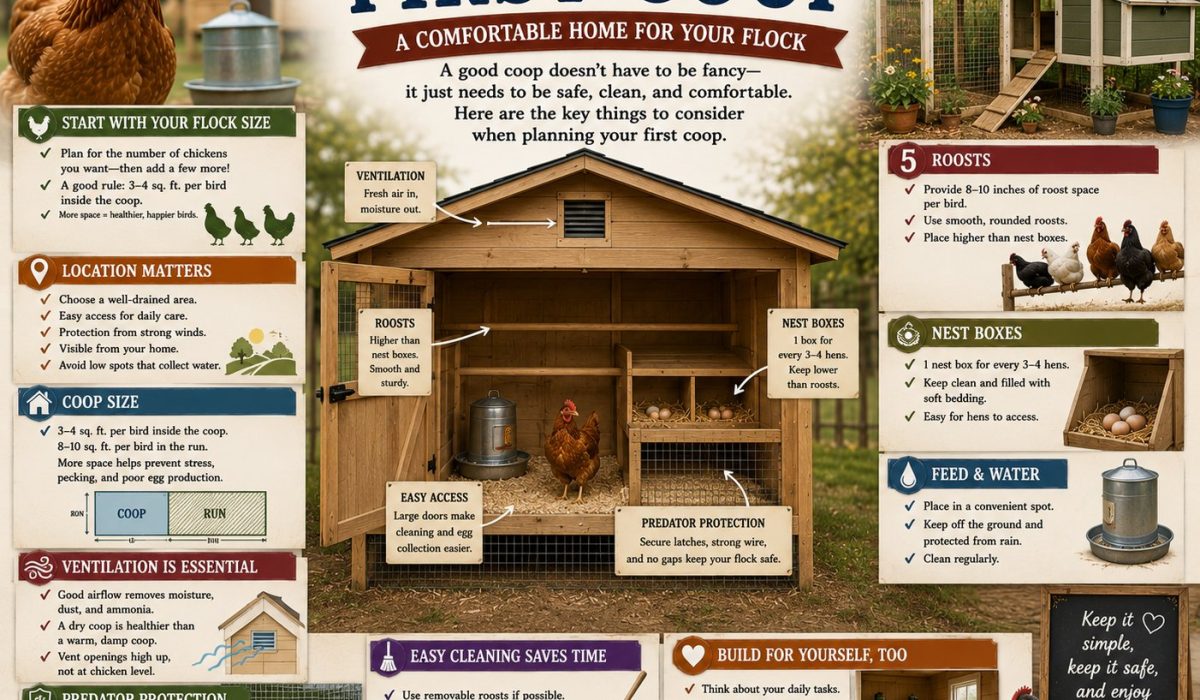
Planning Your First Coop
One of the most exciting parts of raising chickens is planning the coop.
It's also one of the decisions that new chicken owners tend to overthink the most.
Should you buy a pre-built coop?
Build your own?
How large should it be?
How many nest boxes are needed?
The good news is that chickens have fairly simple requirements. A well-designed coop doesn't need to be fancy—it simply needs to be safe, comfortable, and easy to maintain.
Start with Your Flock Size
Before building or buying anything, decide how many chickens you want.
Then add a few more.
Experienced chicken owners often joke that nobody ever stops at their original number.
A coop built for six chickens may eventually house eight or ten.
Planning for a little extra space now can prevent the need for upgrades later.
Location Matters
Choose a location that is:
-
Well-drained
-
Easily accessible
-
Close enough for daily care
-
Protected from excessive wind
-
Visible from the house when possible
Avoid low spots where water collects during rain or snowmelt.
Dry ground helps keep both the coop and the chickens healthier.
Coop Size
One of the most common mistakes is building a coop that is too small.
A general guideline is:
-
3 to 4 square feet per bird inside the coop
-
8 to 10 square feet per bird in the outdoor run
More space is almost always better.
Overcrowding can contribute to:
-
Pecking problems
-
Dirty conditions
-
Stress
-
Reduced egg production
Ventilation Is Essential
Many first-time owners focus on keeping the coop warm.
Experienced chicken keepers focus on ventilation.
Good airflow helps remove:
-
Moisture
-
Dust
-
Ammonia
-
Odors
A dry coop is usually healthier than a warm but damp coop.
Ventilation openings should allow fresh air to circulate without creating direct drafts on roosting birds.
Roosts
Chickens prefer sleeping off the ground.
Roosts provide a comfortable place for birds to perch at night.
Good roosts should:
-
Be smooth and sturdy
-
Allow adequate space between birds
-
Sit higher than nest boxes
Most chickens naturally seek the highest available sleeping spot.
Nest Boxes
Nest boxes provide hens with a quiet place to lay eggs.
A common guideline is:
-
One nest box for every three to four hens
Boxes should be:
-
Easy to access
-
Filled with clean bedding
-
Positioned lower than roosts
Keeping nest boxes clean encourages hens to use them consistently.
Feeding and Watering Areas
Your coop design should allow easy access to feed and water.
Consider:
-
Protection from rain
-
Ease of cleaning
-
Prevention of contamination
Elevated feeders and waterers often remain cleaner than those placed directly on the ground.
Predator Protection
A beautiful coop isn't much use if predators can enter.
Important features include:
✓ Secure latches
✓ Strong fencing
✓ Hardware cloth
✓ Covered openings
✓ Dig-proof protection
Predator security should be considered from the very beginning of the design process.
Easy Cleaning Saves Time
Many new owners focus on appearance.
Experienced owners often focus on cleaning.
Features that simplify maintenance include:
-
Large access doors
-
Removable roosts
-
Smooth interior surfaces
-
Accessible nest boxes
The easier a coop is to clean, the more likely it will stay clean.
Build for Yourself, Too
The coop isn't just for the chickens.
You'll be using it every day.
Think about:
-
Standing room
-
Access during bad weather
-
Convenient storage
-
Egg collection
A coop that is comfortable for the owner often results in better care for the flock.
Keep It Simple
It's easy to spend hours looking at elaborate coops online.
Many are beautiful.
Some are enormous.
Most chickens, however, care about only a few things:
-
Safety
-
Dry bedding
-
Fresh air
-
Food and water
-
A place to roost
-
A comfortable nest box
If your first coop provides those essentials, you're already off to a great start.
And like many chicken owners, you'll probably discover that planning the coop is only the beginning of the adventure.
Posted in resources by Erik Johansson